


Garnet Sand
What Is Garnet Sand? Properties, Uses
Meta Description: What is Garnet Sand? Where is it used—from waterjet cutting to sandblasting? This comprehensive guide examines the properties, advantages, types, and 2025 pricing of garnet sand in detail.
Definition and Natural Structure of Garnet Sand
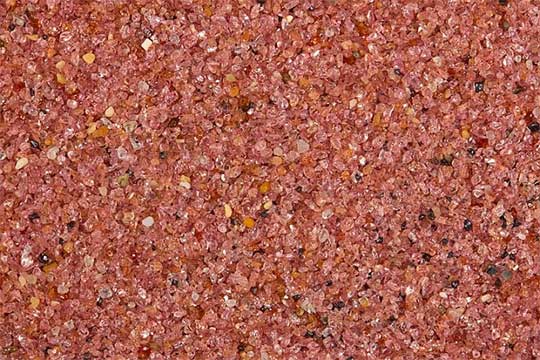
Garnet sand is an abrasive material formed naturally through the crushing of garnet minerals. It is known for its superior hardness and density. The garnet mineral family includes almandine, pyrope, grossular, and andradite. Among these, almandine garnet is the most widely used in industrial applications.
Its physical structure features high hardness, uniform grain shape, and sharp edges. Because of these qualities, garnet sand is preferred for both abrasive and precision cutting applications. Chemically, garnet contains iron, aluminum, and silicon compounds and is non-toxic and chemically stable.
Types of Garnet Sand
Aluminum Garnet Sand
The hardest and most durable type—commonly used in waterjet cutting.
Iron-Based Garnet Sand
Ideal for sandblasting operations and high-performance surface cleaning.
Waterjet Garnet
Classified into very fine mesh sizes (such as 80 mesh, 120 mesh), offering precise cutting capability.
How Is Garnet Sand Produced?
- Mining: Garnet-rich rocks are extracted from deposits using heavy machinery.
- Crushing: Rocks are broken down into smaller pieces.
- Screening: The material is separated into specific mesh sizes.
- Purification: Magnetic separation and washing remove impurities.
After these stages, the garnet becomes suitable for waterjet cutting, sandblasting, and filtration applications.
Properties of Garnet Sand
- Mohs hardness: 7.5 – 8
- Density: 3.8 – 4.2 g/cm³
- Chemical resistance: Resistant to acids and bases
- Low dust formation: Produces significantly less dust than quartz sand
- Reusability: Can be reused multiple times
These features place garnet among the highest-performing industrial abrasives.
Where Is Garnet Sand Used?
1. Waterjet Cutting Machines
Used for cutting metal, marble, glass, ceramic, and composites with high precision.
2. Sandblasting (Abrasive Blasting)
Provides efficient surface preparation, rust removal, and paint stripping.
3. Filtration Systems
Acts as a high-performance filtration medium for removing heavy metals and impurities.
4. Industrial Flooring Applications
Improves slip resistance and durability of floor coatings.
Garnet Sand in Waterjet Cutting Systems
Garnet is preferred for waterjet cutting because of its hardness and sharp-edged grain structure. Its advantages include:
- Cleaner and smoother cuts
- No burr formation
- Reduced material waste
- Faster cutting speeds
The most commonly used mesh sizes in waterjet systems are 80 mesh and 120 mesh.
Garnet in Sandblasting Applications
Garnet is an excellent abrasive for sandblasting due to:
- 4–5 times higher durability than quartz
- Minimal dust formation
- Superior surface etching ability
- Environmentally friendly characteristics
For this reason, it is widely used in shipyards, metal facilities, and industrial production plants.
Garnet Sand vs Silica/Quartz Sand
| Feature | Garnet Sand | Silica/Quartz Sand |
|---|---|---|
| Hardness | Very high | Medium |
| Dust formation | Very low | High |
| Health impact | No silica risk | Silica exposure risk |
| Reusability | Yes | No |
| Price | Higher | More affordable |
Garnet is the better choice in terms of performance, safety, and durability.
Advantages of Garnet Sand
- Extremely high hardness
- Cleaner, dust-free operation
- Can be reused multiple times
- High-performance cutting and blasting
- Eco-friendly
Disadvantages of Garnet Sand
- More expensive than other abrasives
- May require special storage conditions
- Transportation costs can be higher due to its density
Despite this, industries often choose garnet because it delivers superior results.
Garnet Sand Prices (2025 Market)
Garnet sand prices vary by application:
How to Choose the Right Garnet Sand
- For waterjet cutting: 80–120 mesh
- For sandblasting: 20–60 mesh
- For filtration: Larger grain sizes
- Check purity and density specifications
Choosing the correct mesh size is crucial for cost efficiency and performance.
Storage and Transportation of Garnet Sand
- Store in dry, moisture-free areas
- Use big bags or kraft sacks
- Protect from rain and humidity
Due to its density, palletized transportation is recommended.
Frequently Asked Questions (FAQ)
1. Can garnet sand be reused?
Yes, especially in sandblasting processes, it can be reused several times.
2. Why is garnet preferred in waterjet cutting?
Its sharp, hard grains produce clean and precise cuts.
3. Is garnet sand hazardous?
No. It does not contain free silica, so it does not pose a silicosis risk.
4. What color is garnet sand?
Dark red, burgundy, or brownish tones.
5. Can garnet be used for filtration?
Yes, especially in industrial water treatment.
6. Is garnet sand better than quartz sand?
In performance and safety—yes. However, it is more expensive.
Conclusion and General Evaluation
Garnet sand is one of the most important materials in modern industry due to its high hardness, safety, and reusability. It is the premium abrasive choice for waterjet cutting, sandblasting, filtration, and flooring applications. Selecting the proper mesh size ensures maximum performance and cost efficiency.